
LGBTQ+ Pronouns Guide: What They Are and How to Use Them
Pronouns are small words that carry a lot of weight. Using someone's correct pronouns is one of the easiest ways to show respect, and getting them wrong, especially over and over, can really hurt. This guide covers what pronouns are, the most common ones, and how to handle them without it being awkward.
What Are Pronouns?
Pronouns are the words we use to refer to a person instead of repeating their name, like "she said," "he left," or "they arrived." Many people use pronouns that match the gender they were assigned at birth. Others use different ones because those match who they actually are.
Common Pronouns
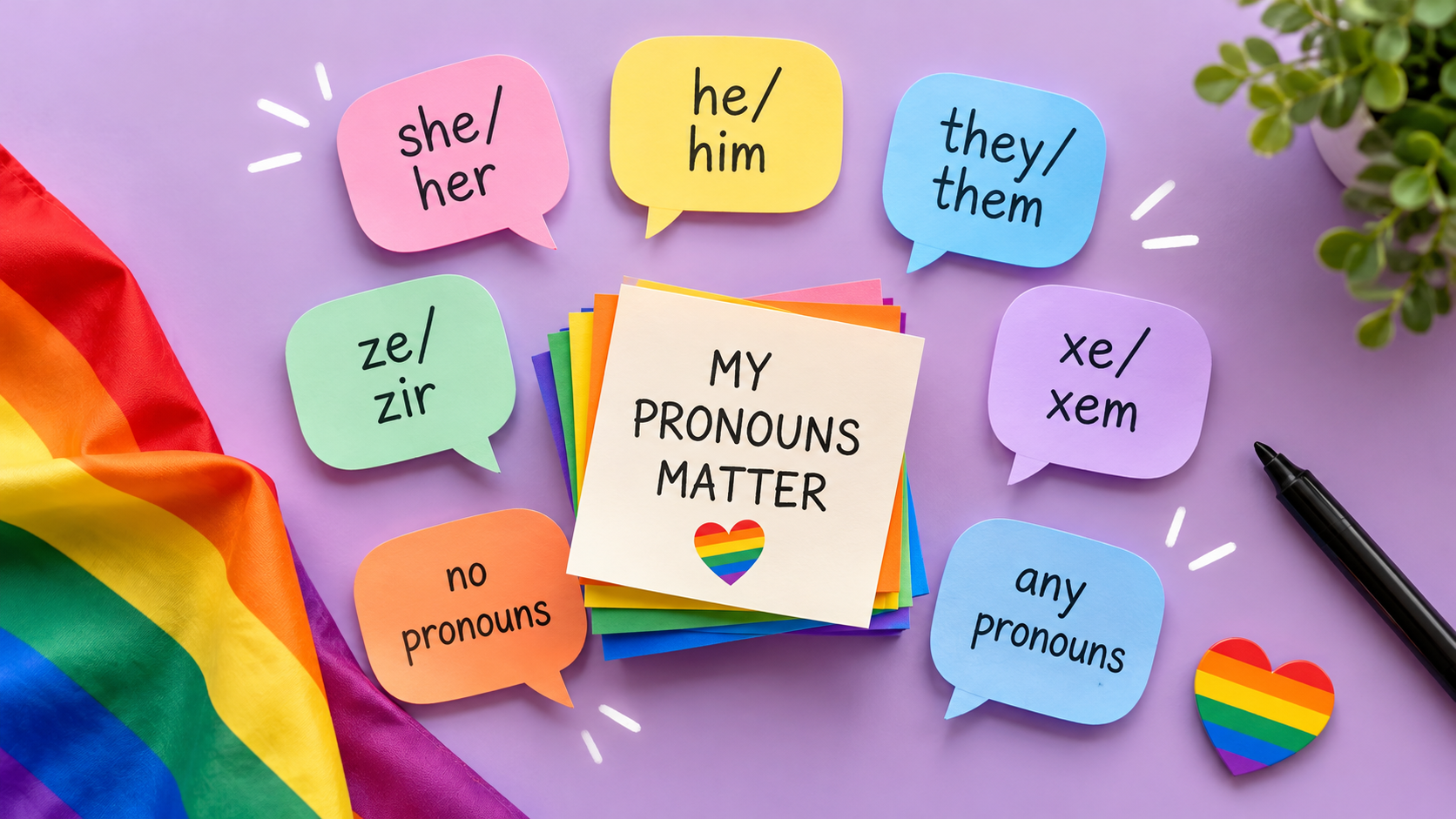
- He/him/his, used by many men and some non-binary people
- She/her/hers, used by many women and some non-binary people
- They/them/theirs, used by many non-binary people, and by anyone who prefers it
- Neopronouns like ze/zir or xe/xem, newer pronouns some people use as their own
- More than one set, such as "she/they" or "he/they," for people who are comfortable with either
Nobody can tell someone's pronouns just by looking at them. That's why asking, rather than guessing, is always the safest approach.
Is "They" Really Okay to Use for One Person?
Yes. Using singular they isn't new. People have used "they" for a single person for centuries, like when you say "someone left their umbrella." It was named Merriam-Webster's word of the year in 2019 because so many people were using it to refer to one specific person. If you can say "they" when you don't know someone's gender, you can say it when you know it's their pronoun.
Why Pronouns Matter
When someone is called by the wrong pronouns, it sends a message that you don't see them as they see themselves. Using the right ones does the opposite: it tells them they're seen and respected. It costs you almost nothing, and it can make a real difference to someone's day, and their sense of safety around you.
How to Ask for Someone's Pronouns
The easiest way is to share yours first:
- "Hi, I'm Sam, and I use she/her. What about you?"
- "What pronouns do you use?"
Other easy habits:
- Add your pronouns to your email signature or social profiles
- Introduce yourself with them in group settings
- If you're unsure, use the person's name until you know
Try to ask everyone, not just people you think might be LGBTQ+. That way no one gets singled out.
What to Do If You Get It Wrong
Everyone slips sometimes. If it happens:
- Correct yourself quickly. "Sorry, they."
- Move on. A short apology is enough.
- Don't make it about you. Long apologies put the other person in the position of comforting you.
- Practice. Say the pronouns to yourself until they come naturally.
A Few Things to Avoid
- Don't say "preferred pronouns." It makes it sound optional. Just say "pronouns."
- Don't guess based on how someone looks. Appearance doesn't tell you pronouns.
- Don't call someone "it." That's dehumanizing.
- Don't ask someone to explain or justify their pronouns. They don't owe you a reason.
Can Pronouns Change?
Yes. Some people change their pronouns as they learn more about themselves, or use different ones in different settings. If someone tells you they've changed, just start using the new ones. Pronouns are tied closely to gender identity, which you can read more about in our guide to types of LGBTQ+ identities and to how people show their gender, which we cover in gender expression explained.
Frequently Asked Questions
What are pronouns?
They're the words used to refer to someone instead of their name, like he, she, or they.
What does "they/them" mean?
It's a set of pronouns used by many non-binary people, and by anyone who chooses them. It's used for one person, just like "he" or "she."
How do I ask someone's pronouns politely?
Share yours first, then ask: "I use she/her. What about you?" Keep it casual and ask everyone the same way.
What if I forget someone's pronouns?
Briefly correct yourself, apologize in a few words, and keep going. Don't turn it into a long conversation.
Want a place where sharing your pronouns is just normal? AffirmSpace is built for that.

💬 Community Thoughts
No comments yet