Gender Expression Explained: How Identity Shows Up on the Outside
You've probably heard "gender identity" and "gender expression" used as if they mean the same thing. They don't. Gender identity is who you know yourself to be on the inside. Gender expression is how that shows up on the outside: the clothes you wear, how you style your hair, the way you talk or move through the world.
This guide is about that second part: what gender expression actually is, the different ways people express it, and why it doesn't always tell you what you think it does.
What Is Gender Expression?
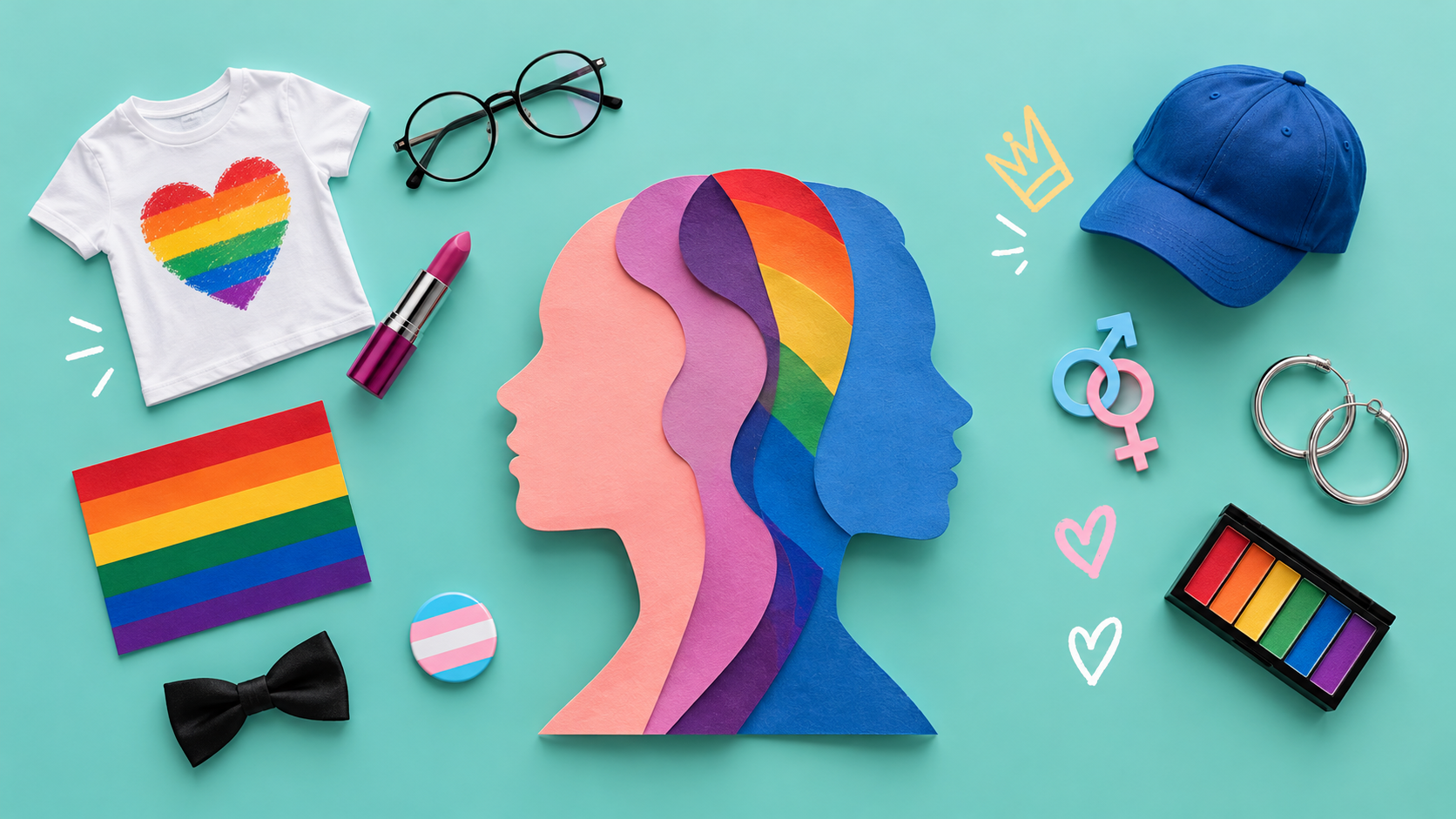
Gender expression is how someone presents their gender to the world. It can include:
- Clothing: what you wear and how you wear it
- Hair and grooming: style, length, color, makeup
- Voice: tone, pitch, how you speak
- Mannerisms: how you move, sit, and gesture
- Name and pronouns: what you go by and how you want to be addressed
None of this has to match anyone's expectations. A person can dress in a traditionally masculine way and still be a woman. Someone can have a soft, traditionally feminine voice and be a man. Gender expression is personal, and it's allowed to look however feels right to the person living it.
Gender Expression vs. Gender Identity vs. Sexual Orientation
This is the part that trips people up most, so here it is plainly:
- Gender identity is who you are, internally.
- Gender expression is how you show that outwardly.
- Sexual orientation is who you're attracted to.
These three don't predict each other. A masculine-presenting woman isn't automatically a lesbian. A man with a feminine gender expression isn't automatically gay. How someone dresses or sounds tells you almost nothing reliable about their identity or who they're attracted to, and assuming otherwise is how stereotypes start. For the bigger picture, our complete guide to LGBTQ+ identities explains how all of these fit together.
Types of Gender Expression
People usually describe gender expression in a few broad groups, though real life is messier than any list:
- Masculine expression leans toward traits commonly linked with men, like certain clothing styles, shorter hair, or particular mannerisms.
- Feminine expression leans toward traits commonly linked with women, like dresses, makeup, or longer hair.
- Androgynous expression blends masculine and feminine traits, or sits somewhere in between.
- Gender-neutral expression steps outside the masculine/feminine framework altogether instead of mixing the two.
Nobody has to stay in one group. Plenty of people move between them depending on the day, the setting, or just how they feel.
Why Gender Expression Matters
For many people, gender expression is a simple, low-stakes choice. You wear what you like. But for transgender and gender-nonconforming people, it's often tied to something bigger: feeling seen as who you really are. Being able to dress, style your hair, or speak in a way that matches your gender identity is often described as a relief, not just a style preference.
It's also worth being honest that people whose gender expression doesn't match what's expected of them often face stares, comments, and sometimes harassment. That's not a reason to hide who you are. It's a reason for the people around someone to think twice before making assumptions based on how they look or sound.
The Simple Version
You can't tell someone's gender identity or who they're attracted to just by how they dress, talk, or carry themselves. If you're not sure how someone wants to be addressed, the respectful move is to ask. Our guide to LGBTQ+ pronouns (/blog/identity-expression/lgbtq-pronoun-guide) shows how to do that comfortably.
Frequently Asked Questions
What's the difference between gender identity and gender expression?
Gender identity is your internal sense of your own gender. Gender expression is how you present that outwardly through clothing, hair, voice, and behavior. One is internal and the other is external, and they don't have to match any particular expectation.
Can gender expression change over time?
Yes, for a lot of people it does. Someone might express their gender differently depending on mood, setting, or how their sense of themselves evolves.
Does gender expression tell you someone's sexual orientation?
No. Clothing, voice, and mannerisms don't reliably show who a person is attracted to. Gender expression and sexual orientation are separate.
Is androgynous the same as non-binary?
Not exactly. Androgynous describes an expression, meaning how someone presents. Non-binary describes an identity, meaning who someone is. A non-binary person can have a masculine, feminine, androgynous, or any other expression, and a cisgender person can have an androgynous expression too.
Want to connect with people who understand all of this without you having to explain it first? AffirmSpace is where you can start.

💬 Community Thoughts
No comments yet