LGBTQ+ Flags and Their Meanings: A Simple Guide
If you've ever seen a flag at a Pride event and wondered what its colors mean, you're not the only one. There isn't just one LGBTQ+ flag. Over the years, different communities have made their own flags to represent their identities. Here's what the most common ones mean.
A quick note: many of these flags have more than one version, and the meanings of the colors are explained slightly differently from place to place. What's below are the most widely shared explanations.
The Rainbow Pride Flag
The rainbow pride flag is the best-known symbol of the LGBTQ+ community. It was designed by artist Gilbert Baker in 1978. The original version had eight colors, each with its own meaning: hot pink for sex, red for life, orange for healing, yellow for sunlight, green for nature, turquoise for magic and art, indigo for serenity, and violet for spirit. Hot pink and turquoise were later dropped because of fabric availability, leaving the six-color version most people recognize today.
The Progress Pride Flag
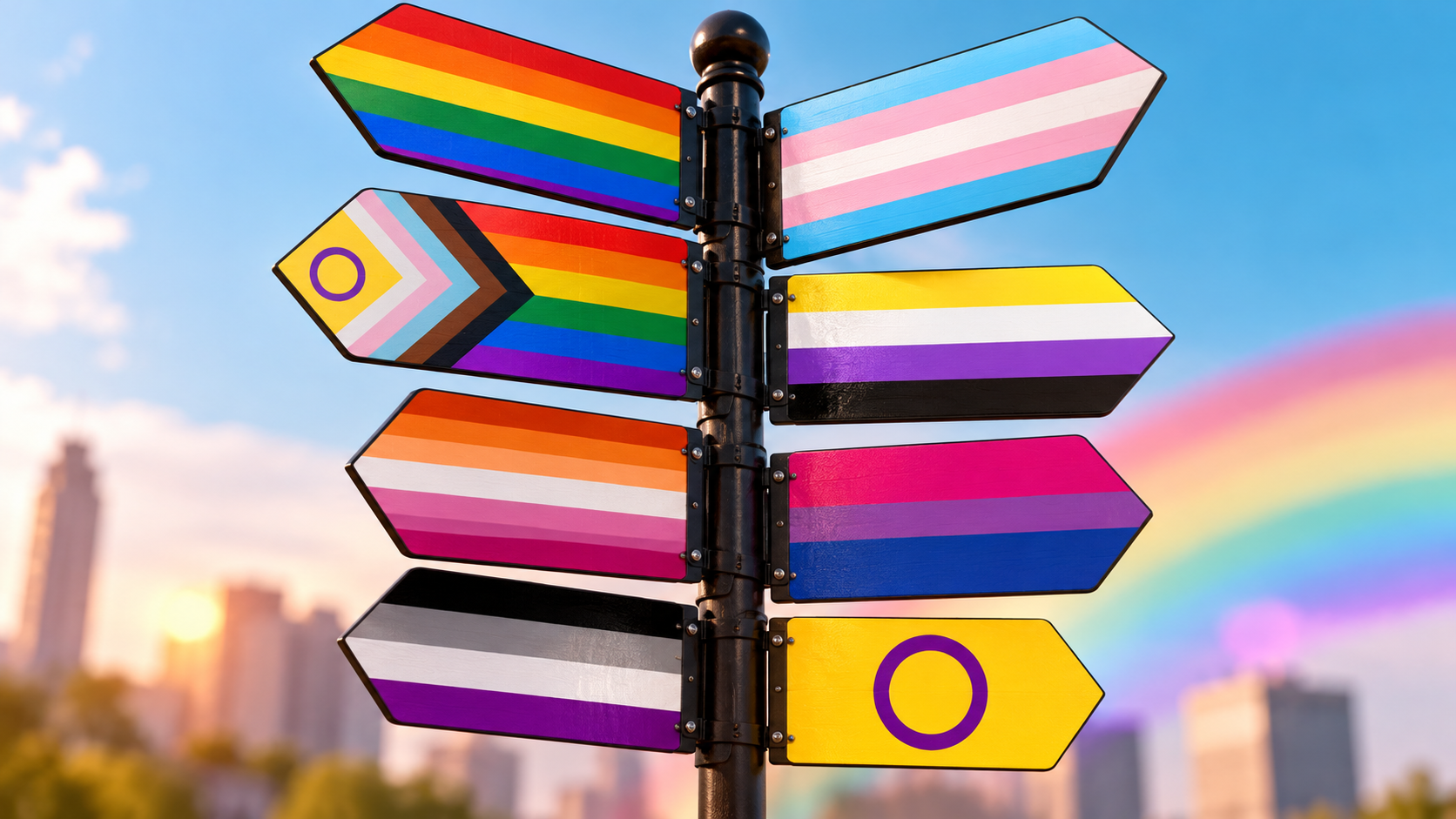
The Progress Pride flag was designed by Daniel Quasar in 2018. It keeps the rainbow stripes and adds a chevron on the left with black, brown, light blue, pink, and white. The extra colors are meant to include people of color and the transgender community, and to recognize those lost to HIV/AIDS. It's a reminder that progress is ongoing.
The Transgender Pride Flag
Designed by Monica Helms in 1999, the transgender flag has five stripes: light blue, pink, white, pink, light blue. Blue and pink are traditionally linked with boys and girls, while the white stripe in the middle is often described as representing people who are transitioning, have a neutral gender, or are intersex. The stripes are symmetrical, so the flag looks right whichever way it's flown.
The Bisexual Pride Flag
Michael Page created the bisexual flag in 1998. It's made of pink, purple, and blue stripes. Pink represents attraction to the same gender, blue represents attraction to a different gender, and the purple stripe in the middle, which is the smallest, represents attraction to both.
The Pansexual Pride Flag
The pansexual flag has three stripes: pink, yellow, and blue. Pink is often explained as attraction to women or feminine people, blue as attraction to men or masculine people, and yellow as attraction to non-binary people or people outside those categories.
The Asexual Pride Flag
The asexual flag has four stripes: black, gray, white, and purple. Black stands for asexuality, gray for the space between asexual and sexual (such as demisexual people), white for non-asexual partners and allies, and purple for community.
The Non-Binary Pride Flag
Kye Rowan made the non-binary flag in 2014 for people who felt other flags didn't include them. It has four stripes: yellow for people whose gender exists outside the binary, white for people with many or all genders, purple for people who feel a mix of masculine and feminine, and black for people without a gender.
The Genderfluid Pride Flag
The genderfluid flag has five stripes: pink for femininity, white for lack of gender, purple for a mix of masculine and feminine, black for all genders, and blue for masculinity. Together they reflect how genderfluid people's identity can move over time.
The Intersex Flag
Created by Intersex Equality Rights Australia in 2013, the intersex flag is bright yellow with a purple circle in the middle. The designers chose colors that weren't already tied to gender stereotypes, and the unbroken circle represents wholeness and being complete as you are.
The Aromantic Flag
The aromantic flag uses shades of green, white, gray, and black. Green represents the aromantic spectrum, white represents platonic and aesthetic attraction, and gray and black represent the range of sexual attraction among aromantic people.
What About Lesbian and Gay Flags?
Several flags have been made for lesbian and gay communities over the years, and different versions are used in different places. Because there isn't one universal version, it's usually best to follow whatever flag the person or group you're talking to uses.
Why Flags Matter
Flags can look like just colors on fabric, but for many people they're a way to say "I see you" or "I belong here." Seeing your own flag can be a small, real moment of recognition. If you want to learn more about the identities behind these flags, our complete guide to LGBTQ+ identities explains each one.
Frequently Asked Questions
Who designed the original rainbow flag?
Gilbert Baker, an artist and activist, designed it in 1978.
What do the colors of the pride flag mean?
In the original design, each color had a meaning: sex, life, healing, sunlight, nature, magic and art, serenity, and spirit. The six-color version most people see today dropped hot pink and turquoise.
What is the Progress Pride flag?
It's a version of the rainbow flag designed in 2018 that adds a chevron of black, brown, light blue, pink, and white to represent people of color, transgender people, and those lost to HIV/AIDS.
Is there one official LGBTQ+ flag?
No. The rainbow flag is the most widely recognized, but many communities have their own flags, and some flags have several versions.
Looking for a community where every part of the flag is welcome? AffirmSpace is built for that.

💬 Community Thoughts
No comments yet